
There are a few factors that can spoil the party

In UK, France and Germany, the president and CEO of Edelweiss Securities, anticipates votes incrementally in favour of local protection and de-globalisation.

The second half of June could be driven more or less by technical factors triggered by news flow from Greece, the US Federal Reserve and the monsoon. The technical picture seems bearish as of now, says Devangshu Datta.

Skymet lowered its full season monsoon forecast to 'below normal' from 'normal', while the IMD is sticking to its earlier forecast that rains in June to September of 2018 would be 'normal' at 97 per cent of the LPA with a model error of +/-5 per cent.

Poor rain threatens recovery in production this season, sugar prices at three-month high

The Centre will review the situation on a fortnightly basis.
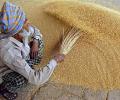
A head of its meeting, the Reserve Bank of India (RBI) can take some solace from the softening food commodity prices. However, the events surrounding the last few weeks show that the fall may not be uniform across all commodities, and cereals like wheat and rice could be the outliers. A Reuters report said that local wheat prices jumped to a record Rs 23,547 per tonne on Wednesday. That is a 12 per cent rise from the recent lows that followed the government's surprise ban on exports on May 14.

Weak monsoon forecast rekindled fears of higher inflation.

Bank of Baroda ended flat after sharp gains in the previous session.

"In the UK, every judge delivers a judgments in maximum of three to four cases in a day. But in Indian courts, every judge on an average presides over 40 to 50 cases every day. Now I realise that they sit extra time...people expect quality judgment. Judges are also human beings," Rijiju said.

RBI Governor Raghuram Rajan expressed anguish at the banks' reluctance to pass on benefits of the earlier rate cuts.

In another forecast for August, IMD Director General Mrutunjay Mohapatra said monsoon is also likely to be normal in the month.
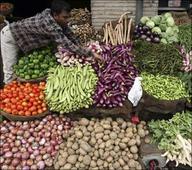
The CII has suggested a 5-point agenda on the measures that need to be undertaken by central and state governments to stave off the adverse effects of a deficient monsoon. Let's find out what this agenda is. . .

India's consumer price index (CPI)-based inflation could ease in the coming months thanks to the arrival of kharif crops, lower international commodity prices, and a pass through of lower input costs to consumers, the finance ministry said in its Monthly Economic Review (MER) for October, which was released on Thursday. The MER, however, warned that the global macroeconomic situation remained precarious and a recession in many advanced economies would impact India's exports. "Easing international commodity prices and new Kharif arrival are set to dampen inflationary pressures in the coming months.

The weak monsoon this year will jack up prices of primary articles further, even as the country's inflation is likely to be in negative territory for the next three months, a report says.

A monsoon deficit is likely to affect the agriculture output, which could have an impact on the food inflation

Farmers in Maharashtra, Gujarat, Karnataka, Tamil Nadu and Telangana anticipate a sharp decline in vegetable output this year, due to sustained declines in the water table after consecutive years of below-average rain. Prices of vegetables are expected to stay high for the next four to six weeks.

Till June 30, the southwest monsoon was 33 per cent lower than normal, which is among the worst in the last five years, with 28 of the 36 meteorological divisions recording deficient rain.

Sustained rural poverty can't be eradicated without capacity building.
If the real economy is indeed looking up, then it no longer needs hand-holding and fiscal laxity
For August, CRISIL core inflation indicator stood at 3.6 per cent, a tad higher than RBI's measure.

Five states -- Maharashtra, Haryana, Rajasthan, Punjab and Gujarat -- face a massive power crisis.

The Indian Meteorological Department has said that that there has been a forecast for 'heavy to very heavy' rainfall across Konkan and Goa and it includes Mumbai as well.
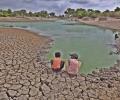
The well-irrigated states of Punjab, Haryana, Karnataka, western Uttar Pradesh and coastal states such as Odisha are, for the first time, feeling the effects of a poor monsoon.
The agriculture ministry believes that even a minor revival of the monsoon could affect the moisture level of the existing crop and therefore its quality.

However, the areas under paddy - the biggest cereal grown during the kharif season - continue to be less than last year, mainly due to delayed onset of rains and also on account of shift towards the more lucrative maize.

For rest of the year, the issue is largely going to be the balance between growth rates and macro stability versus interest rates, says Sankaran Naren.

The slowdown in sowing is mainly because of the delayed onset of the southwest monsoon and its slow progress in June.
The rains in August have also led to speculation that if the trend continues, rains in September, the terminal month of the four-month monsoon season, could be better, thus aiding production of paddy and other kharif crops.
The state government will wait and watch till August 15 before declaring the affected areas, state Agriculture Minister Naren De said in Kolkata.

Kerala, Andhra, Tamil Nadu and Kerala are facing a severe drought this year, affecting livelihoods as well as lives.

The top gainers on the Sensex are Gail(India), HDFC, Infosys.

It could add to pressure on inflation, especially food inflation, which was already high, it said.

Food production in the current fiscal is likely to go down as sowing will be 20 per cent lower due to the weak monsoon, Finance Minister Pranab Mukherjee said on Tuesday. Also, 161 districts have been declared drought-prone, he added.

Top losers in the Sensex pack were Hero MotoCorp, HCL Tech, TCS, Asian Paints, IndusInd Bank and Infosys, shedding up to 3.08 per cent.

Insufficient rainfall will have a negative impact on the economy.
The price stabilisation fund will call for processing capacity for perishables.

According to World Gold Council (WGC), gold jewellery demand in India, the world's largest consumer, touched record 662.1 tonnes in 2014.
